Spotify currently uses AI to recommend music to its users. However, the use of AI for music exploration is expanding and continuously improving so I'm setting out to discover if the services use of the technology can be taken further! Strategy, Research, UX Design 80 hours: Pen & paper, Sketch, Invision Spotify does an excellent job of helping its users discover new music. Despite this, music taste is wildly specific to an individual which means that there is an exciting opportunity here to improve upon music exploration within the Spotify app. Before designing, I needed to understand specifically what opportunities there were and how we could deliver on those to offer a better product.
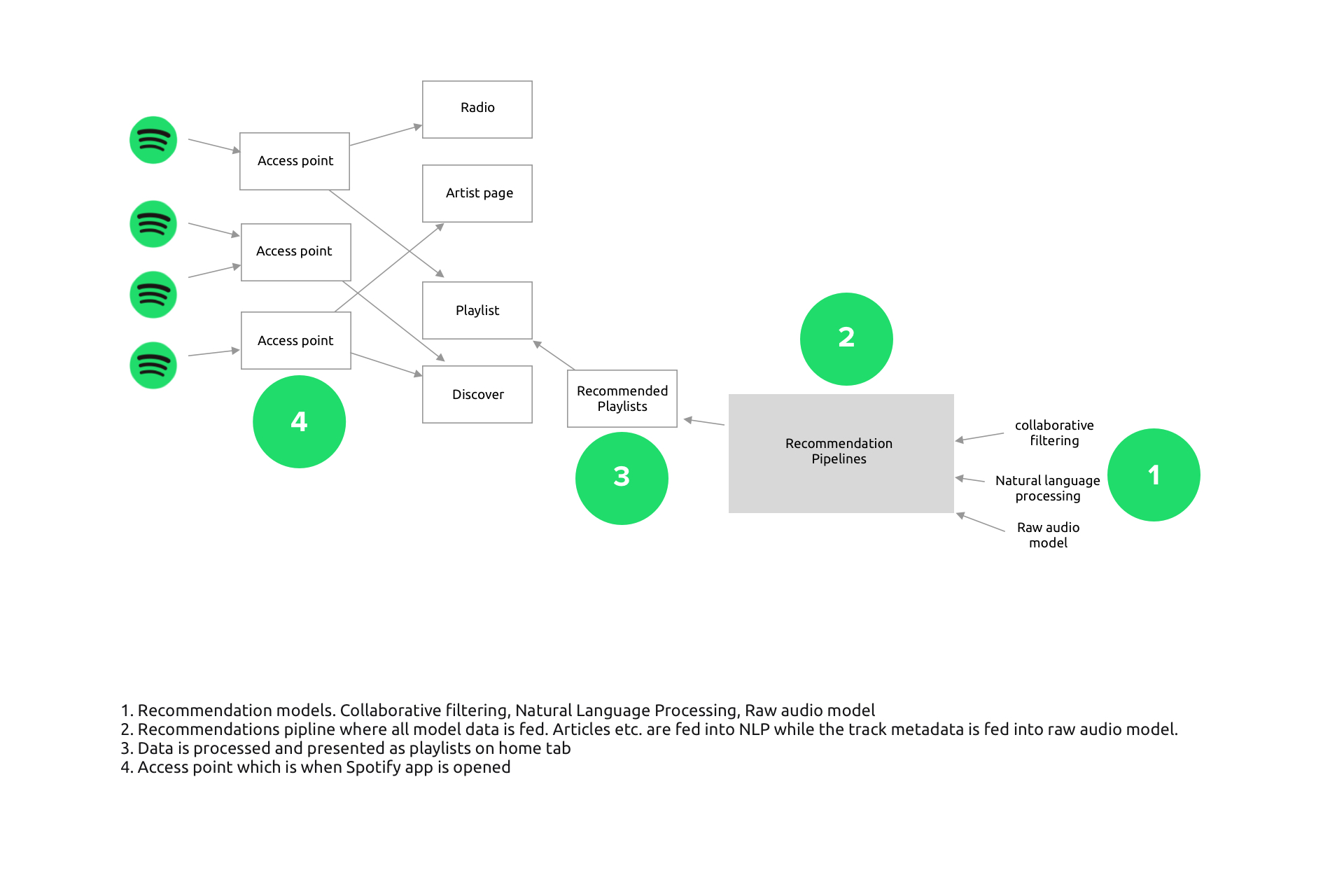
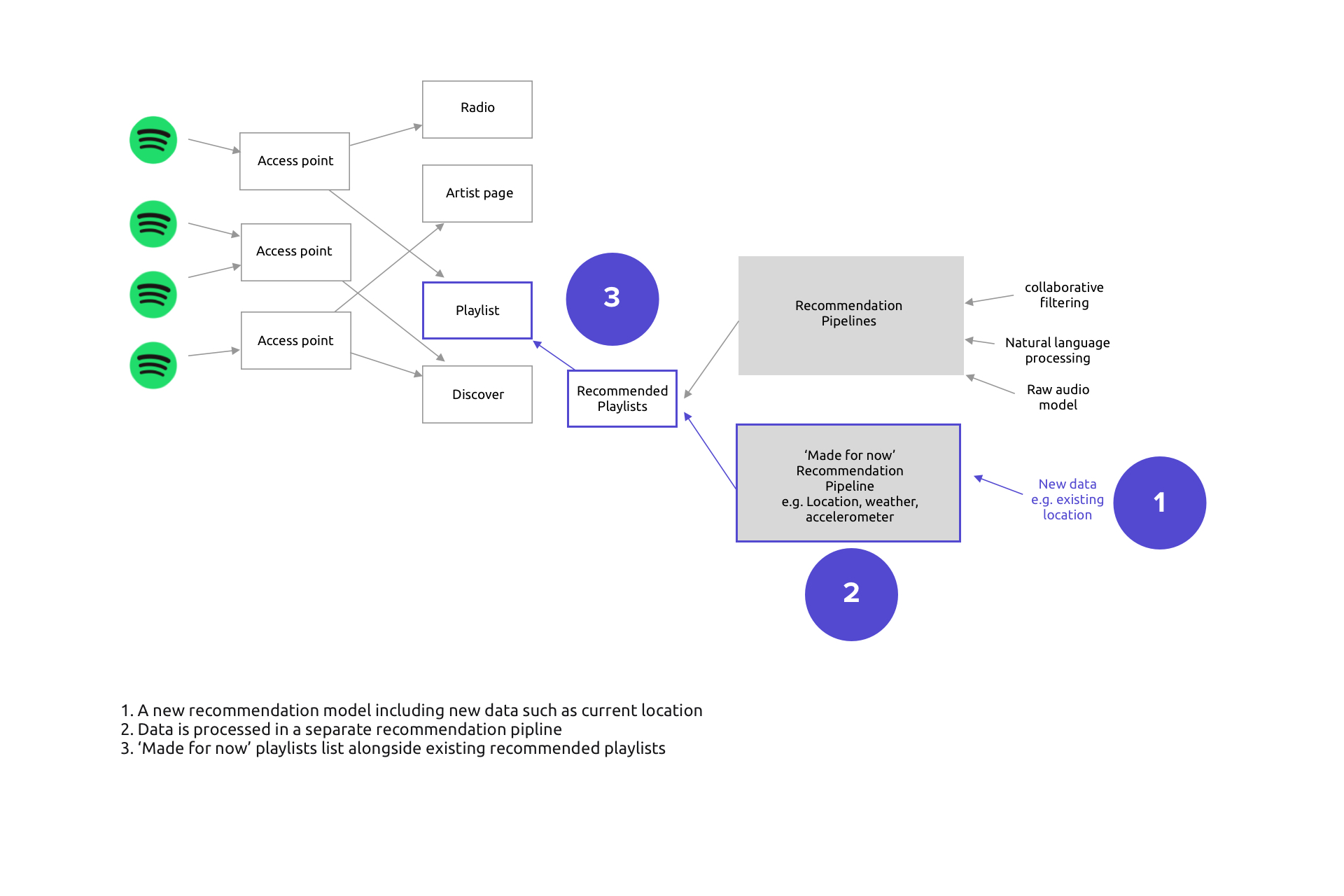
I discovered that AI is used in different ways by various streaming services. Some brands used AI to help users browse for music using voice search, others used it to recommend tracks. I then looked into how Spotify recommended music technically as this would give me greater insight into how the proposed feature could integrate into the existing infrastructure. I discovered that Spotify uses three recommendation models in combination to recommend music to users. These include collaborative filtering, Natural language Processing (NLP) and raw audio models. At this point, I had a good understanding of the market but needed to understand the typical Spotify user and what their goals and constraints were. I conducted a contextual enquiry with three regular users of the Spotify Android app and learnt the following: It was then essential to define the user, the goals (user, business and technical) and the direction of the AI feature.
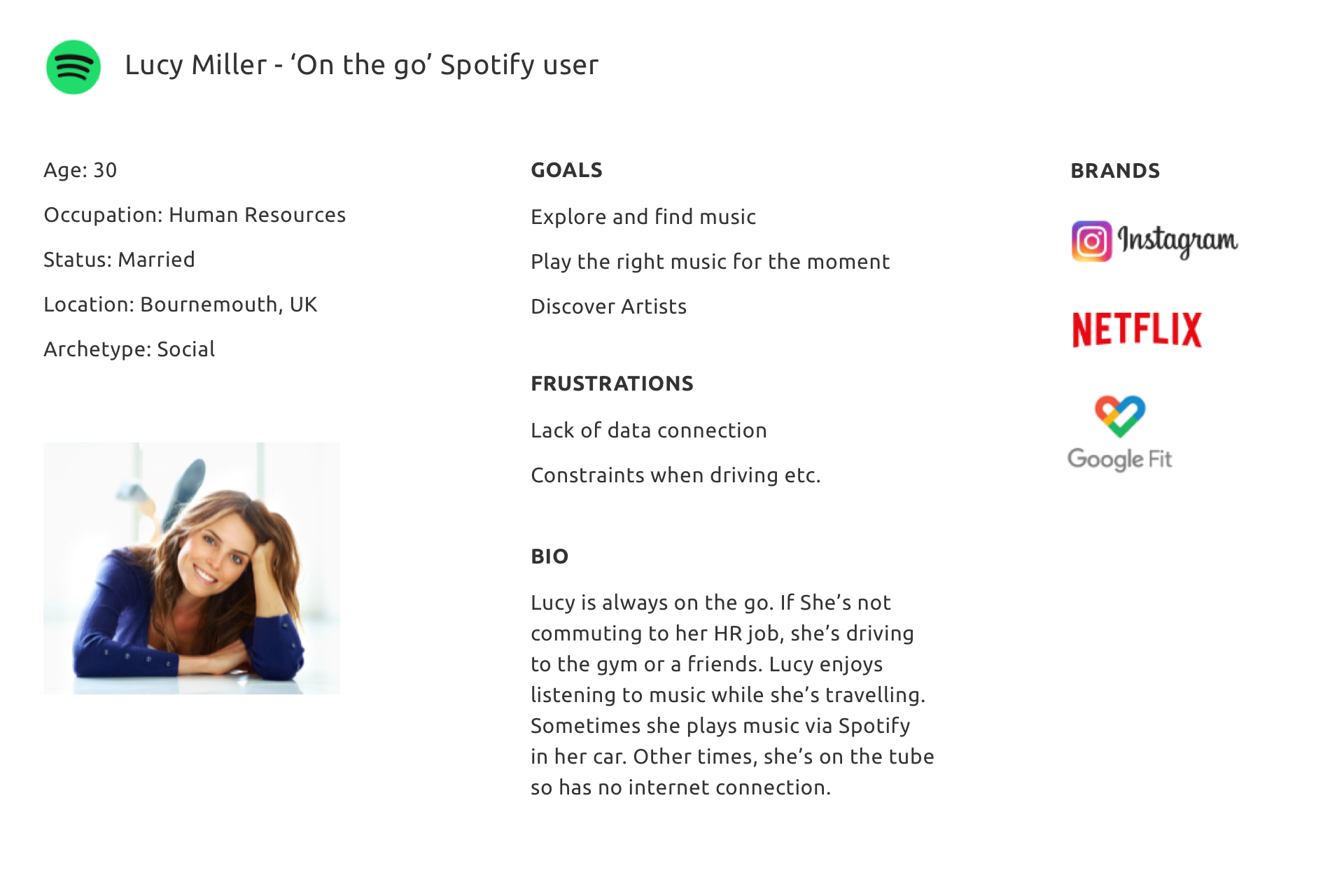
The user persona painted the picture of a general Spotify mobile user who relied on the app to listen to music on the go.
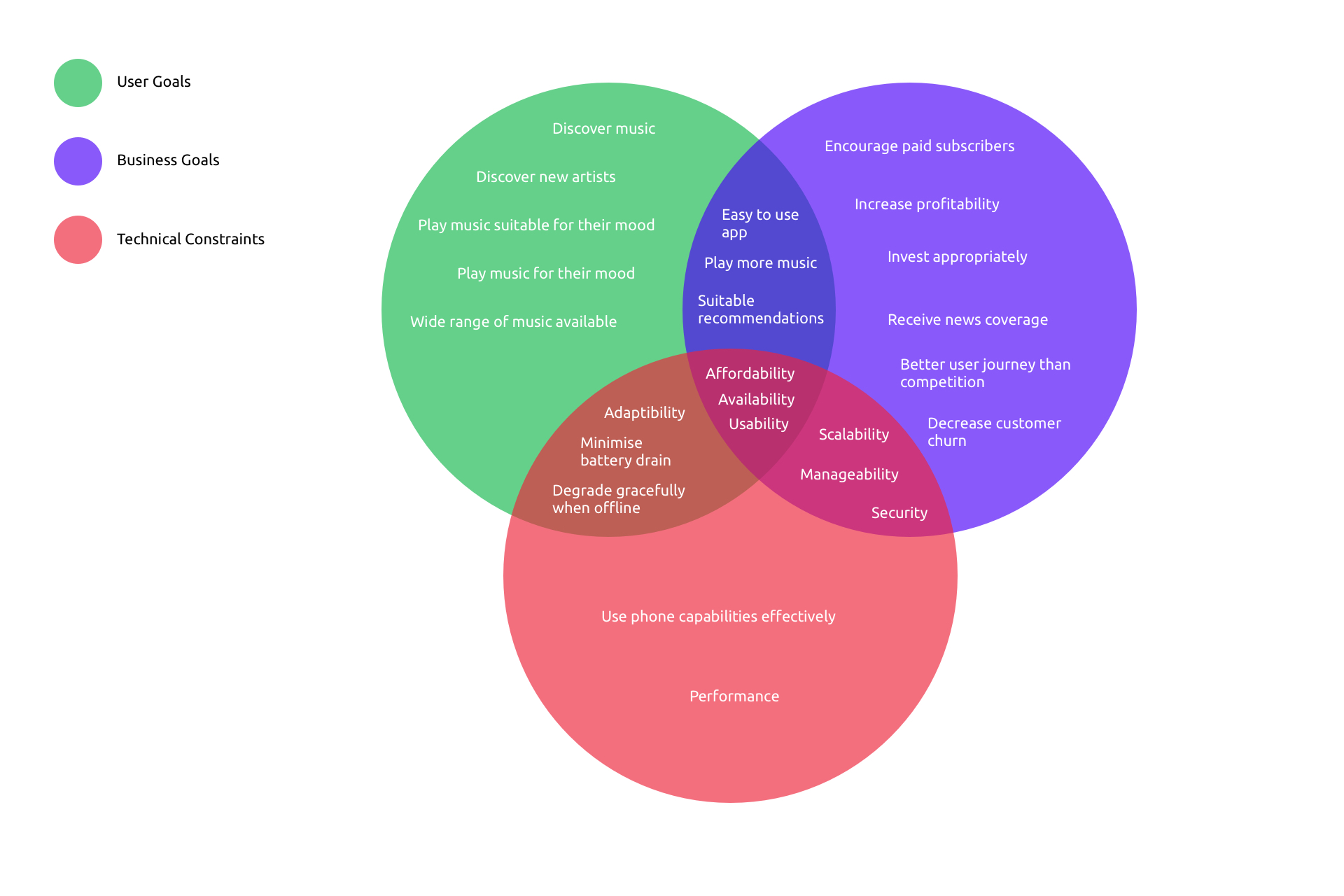
Research had revealed numerous user, business and technical goals and I set these out as they would all influence the new AI feature, both directly and indirectly.
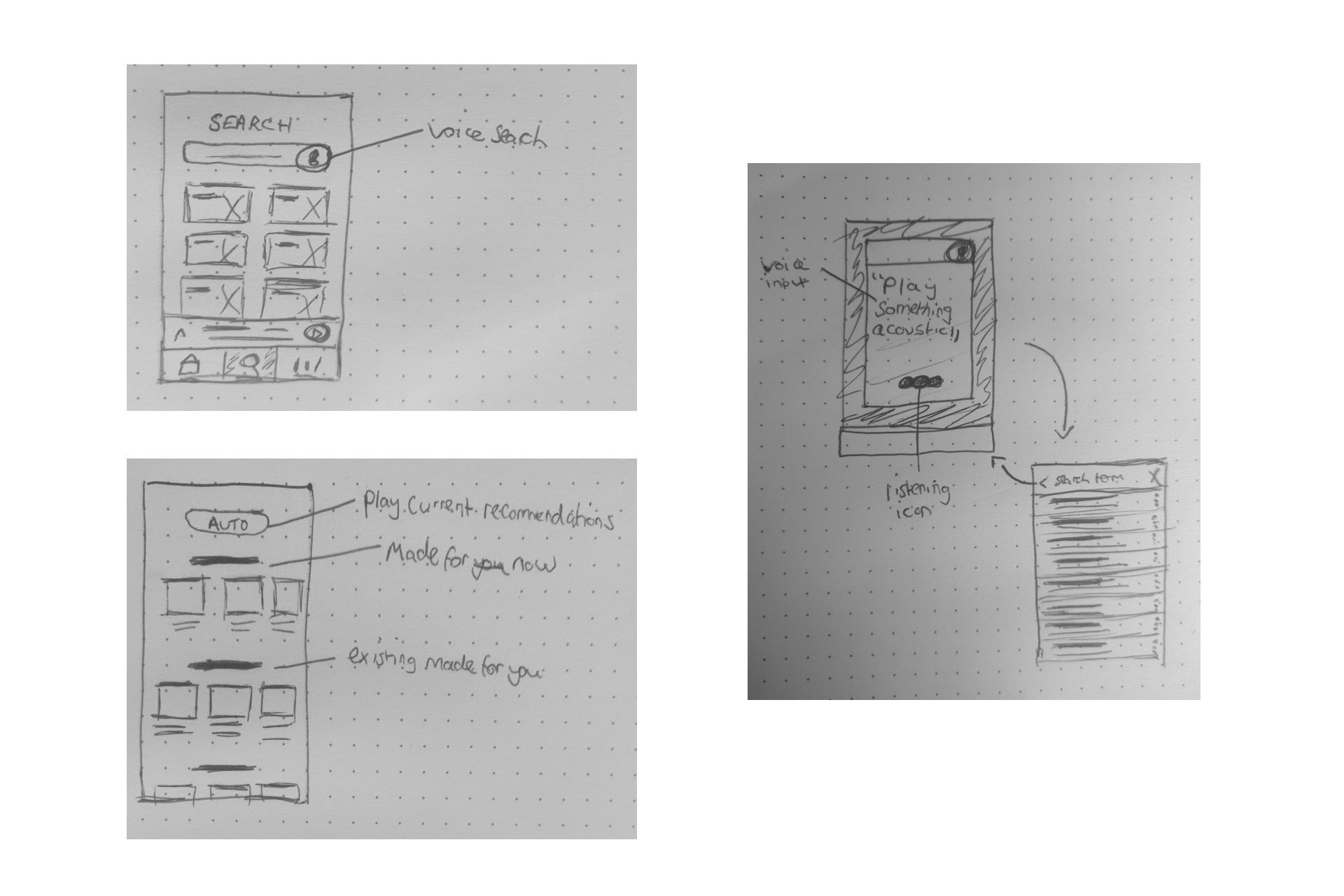
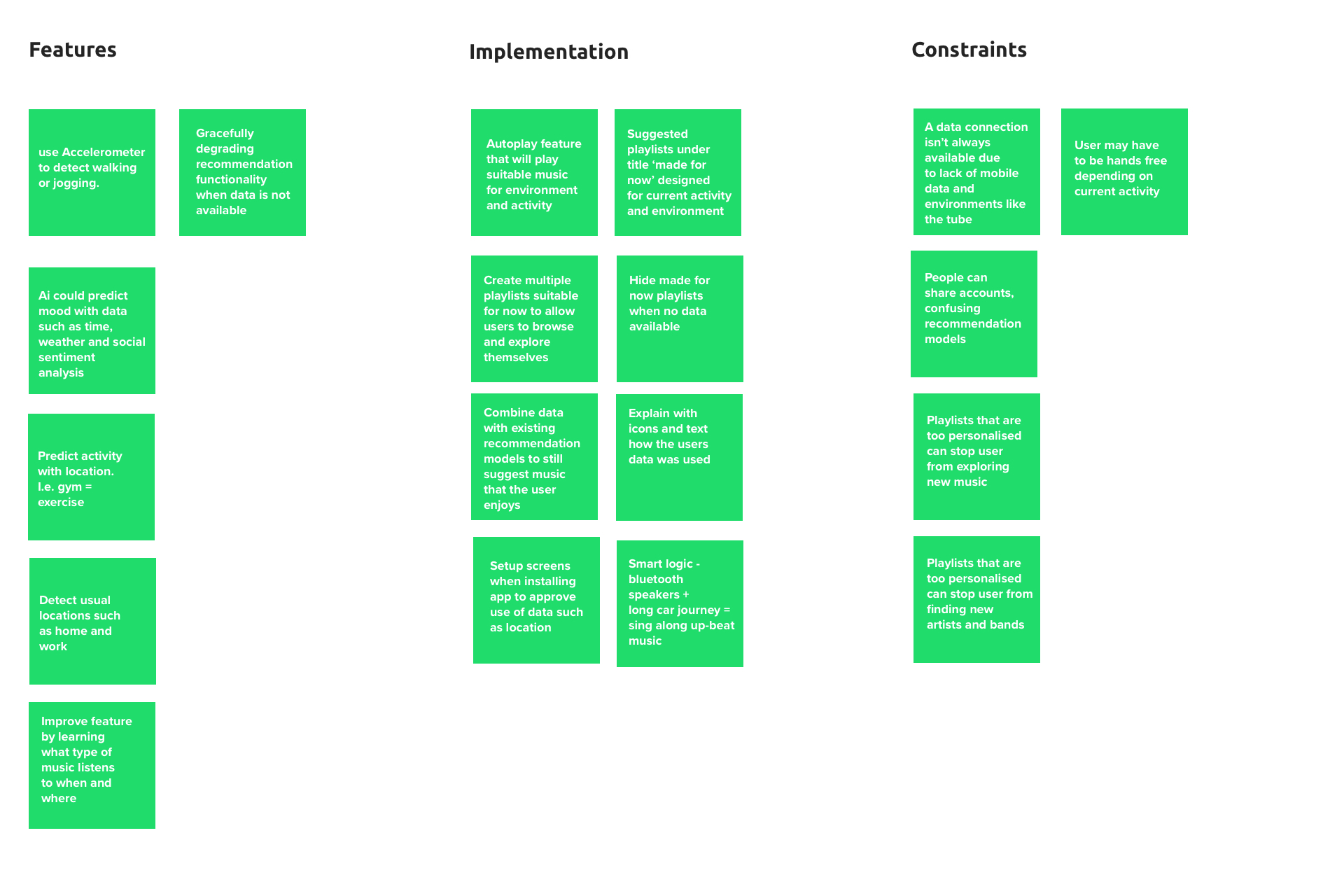
I ideated on various AI features, making sure to design for user goals and constraints. I could see potential in using voice search to help users explore music but concluded that users tended to scroll through recommended playlists rather than search. Instead, I decided to expand on the music recommendation AI by adding real-time user data such as current location and accelerometer feedback. Practically, this would mean that music could be played/suggested to the user which is suitable for the activity (e.g. walking, working) and the environment (e.g. hot weather, car journey).
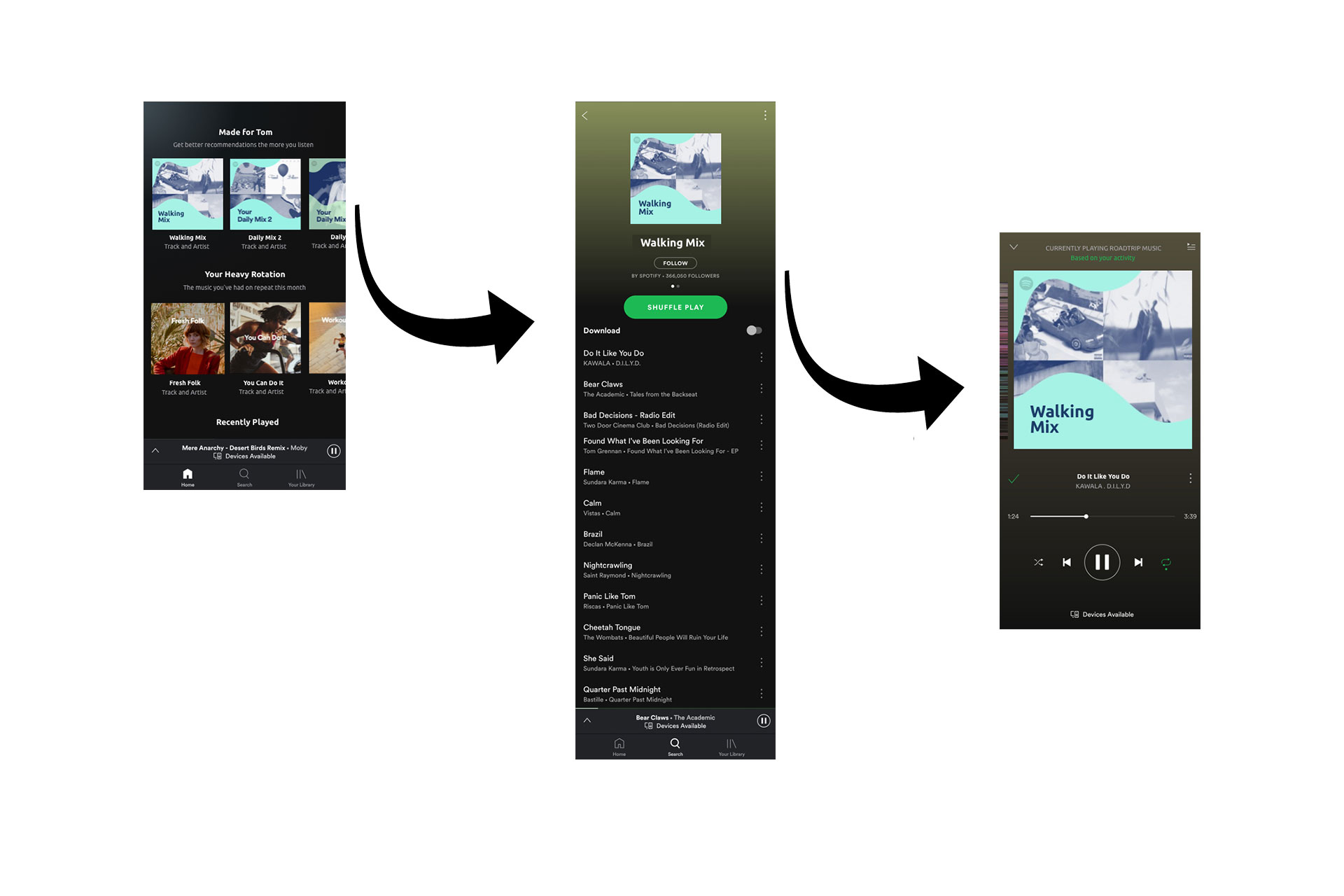
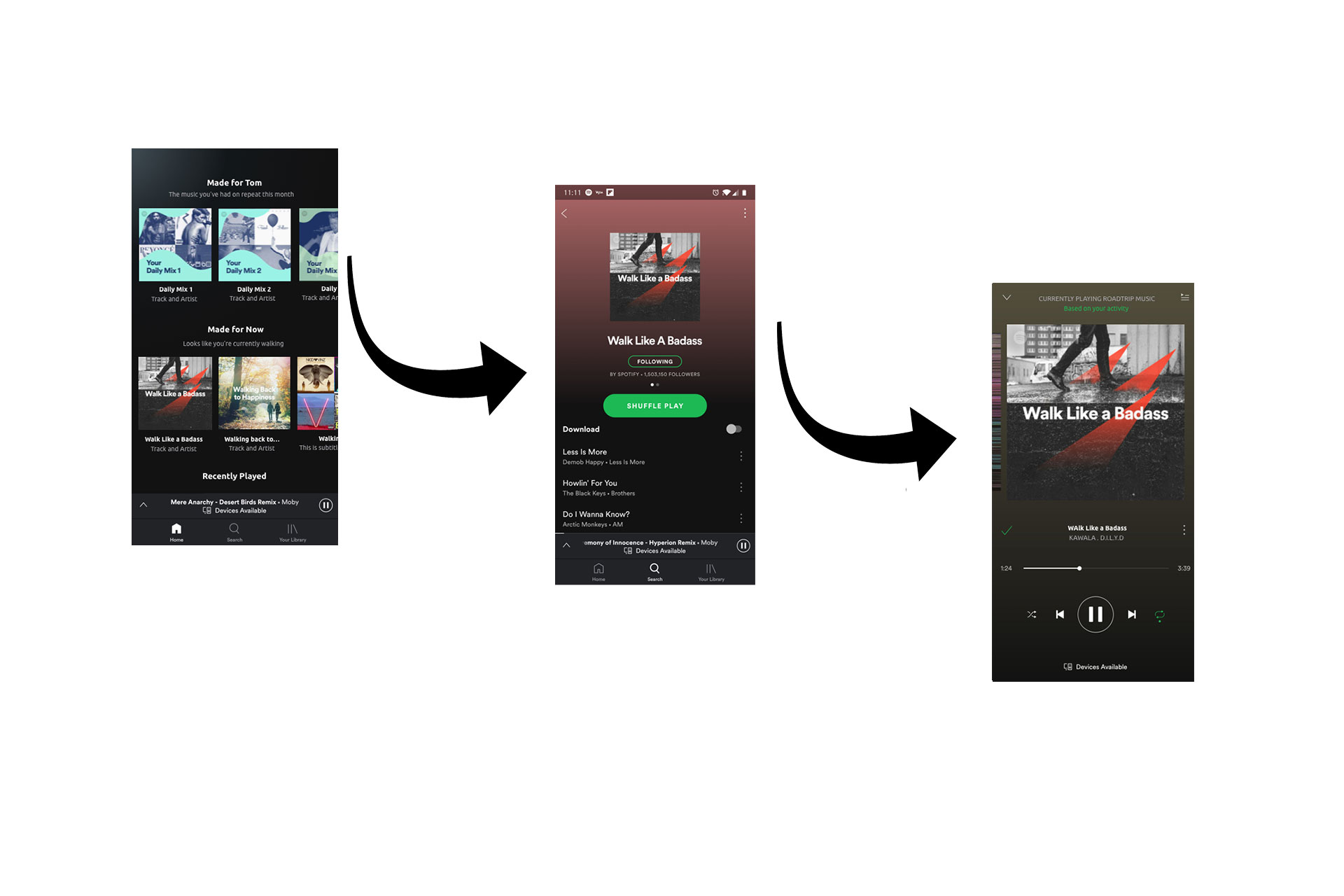
I considered various versions of the feature including an auto play button and a more integrated design.
I also considered how the feature would integrate technically into the existing Spotify recommendation models.Designing an AI feature for Spotify mobile
ROLE:
MENTOR:
PROJECT SCOPE & TOOLS:
Phase 1: Discover
Secondary Research
Spotify Recommendation Models Diagram
Contextual Enquiry
Phase 2: Define and Ideation
User Persona
Goals
Ideation
Affinity Diagram
Task Flow / diagram
Phase 3: Design and Prototyping
Invision Prototypes
I prototyped two different versions of the AI feature, designing the screens in Sketch and then building these into functioning prototypes with Invision. This workflow would allow ‘lifelike’ testing of the app feature on a physical mobile.
Phase 4: Testing
Testing with context
I then tested the prototypes with three participants on an Android mobile in the appropriate environment. It was very important to me that there was context so if a user tended to listen to Spotify in their car, that’s where the test would be. The format was relaxed and the participants were given space to explore the app as well as discuss their thoughts and actions.
Initial testing revealed that users could potentially find the feature useful and didn’t seem to have a problem with the use of their data. Spotify users trusted the brand and could see how the feature would be valuable. However, it became apparent that the current design blended in too much with the existing interface which essentially hid the feature.

Iteration
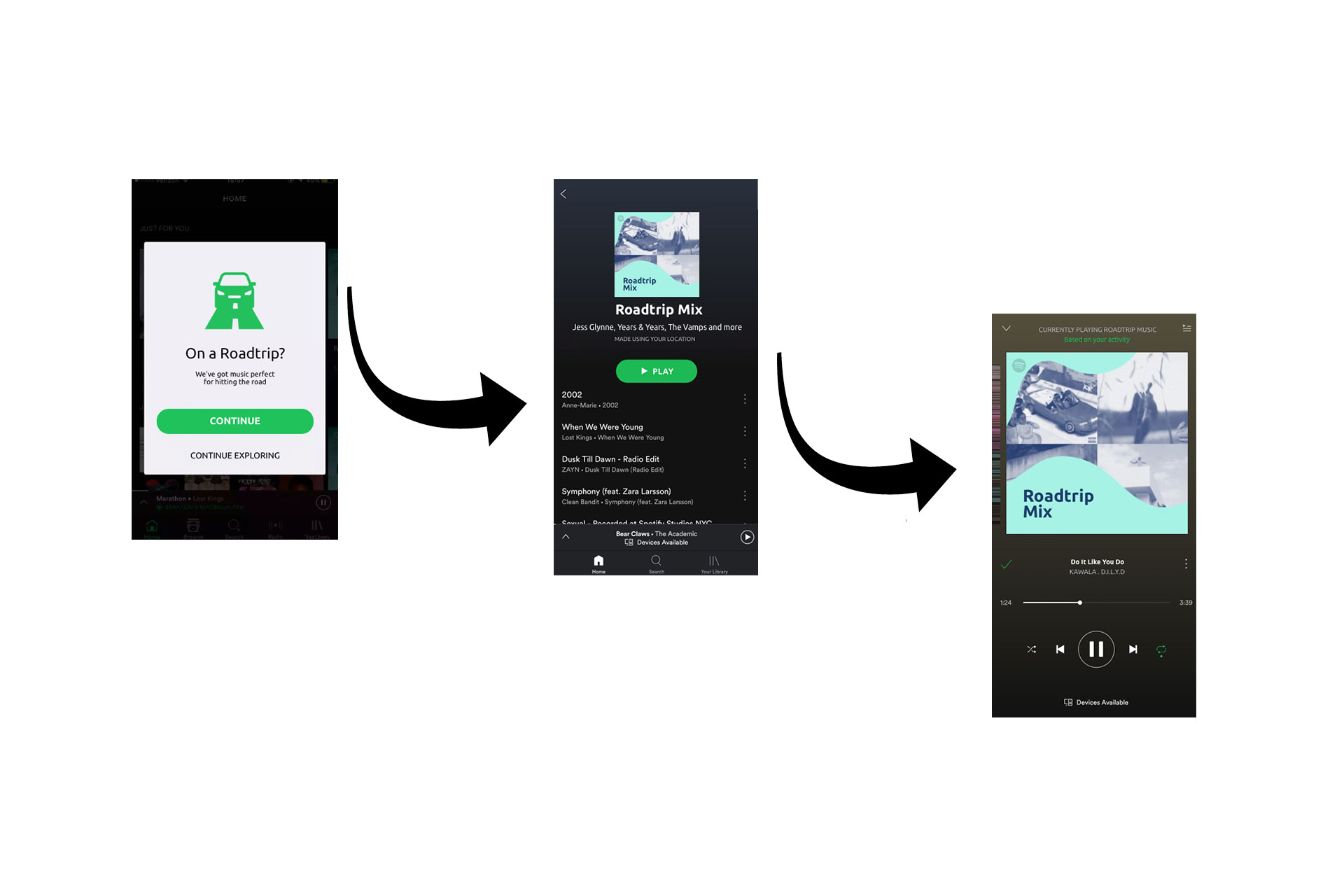
In a process of iteration, I took the testing feedback on board and designed / redesigned the following:
Conclusion
Reflection
I discovered that Spotify users are trusting of the service and are happy for their data to be used in order to improve music suggestions. While users want to feel that music suggested on the app is fully personalised to them, they also want this process to happen almost automatically and don’t feel the need for further controls. For that reason, the proposed feature uses multiple sources of data to further personalise music suggestions in an expected and unobstrusive fashion.
Next Steps
It is worth bearing in mind that the research conducted was mostly of a qualitative nature. While it’s been very effective for discovering opportunities, quantitative data will be needed to prove the effectiveness of this feature and it’s design. To take this project further, I believe that a functioning prototype would need to be developed which could be released to active users via A/B testing. Over time, user data and feedback would give an accurate idea of the success of the AI feature and would be an ideal place to move forward.